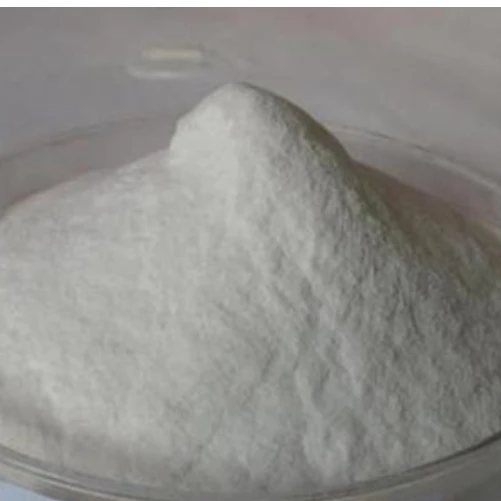
Q: What is ammonium bicarbonate used for?
A: Ammonium bicarbonate is a white powdery or crystalline (sand-like) substance with an ammonia odor. It is used in cooking, fire extinguishers, paint making and other items.
Q: Is ammonium bicarbonate unsafe?
A: Ammonium bicarbonate is safe. But it stimulates the skin, eyes and respiratory system. Short-term health effects may occur immediately or shortly after exposure to high ammonium bicarbonate. Inhalation of ammonium bicarbonate can irritate the nose, throat and lungs, causing coughing, wheezing or shortness of breath.
Q: Is ammonia bicarbonate baking soda?
A: Ammonia bicarbonate is a kneading agent, the same as baking powder and old baking soda. It is originally made of deer antler and is one of the ancestors of modern powders. Northern Europeans still use it because it makes their doogh and gingerbread cookies very light and crunchy.
Q: What is the difference between sodium bicarbonate and ammonium bicarbonate?
A: Unlike sodium bicarbonate, which leaves residues of alkaline sodium carbonate, ammonium bicarbonate leaves no residue due to thermal decomposition. Therefore, it has no effect on the pH of the cooked product. For this reason, ammonium bicarbonate is only used in low-moisture products such as crackers.
Q: Are ammonium products safe to eat?
A: Compounds such as ammonium bicarbonate, ammonium hydroxide, ammonium phosphate and ammonium chloride are considered safe in small amounts. In 1974, the US Food and Drug Administration recognized ammonium hydroxide status as GRAS or as safe in general.
Q: Is ammonium bicarbonate useful for gastric acid reflux?
A: Doctors often believe that ammonium bicarbonate is effective in relieving acid reflux. Due to its alkaline pH, it helps to neutralize the acidity of your stomach and works in a very similar way to many antacids.
Q: Is ammonium bicarbonate safe?
A: Accidental ingestion of large amounts of ammonium bicarbonate can be harmful and cause serious damage to health, resulting in diarrhea, systemic intoxication and increased urine output. Inhaling it can cause respiratory tract irritation, and the body's response to the irritation can cause further lung damage. It is also known to cause irritation in contact with skin.
Q: What is ammonium bicarbonate powder?
A: It is a leavening agent and the forerunner of today' s baking powder and baking soda. Originally made up of the bottom antlers of reindeer, this is often considered as an ancestor of new backing soda.Unfortunately, it can impart an unpleasant ammonia flavour, so it is best utilised for cookies and pastries that are sufficiently small to permit the ammonia odour to dissipate while baking. It can be found in drug stores, baking supply stores, or an order catalogue. Must be ground into a powder before using it. The ordinary household ammonia is different from a poisonous commercial, so do not confuse.
Q: Does Ammonium Bicarbonate have any side effects?
A: Ammonium Bicarbonate is a harmless food ingredient; there is no prescribed or recommended limit of its daily consumption, and there are no known side effects either. It may irritate our eyes and respiratory system during the production of gas, so we should pay attention to air the kitchen thoroughly when using it.
Q: What cakes can we use Ammonium Bicarbonate for?
A: It is perfectly suited to use for thin dough and cakes with several layers, as thicker dough might retain the smell of ammonium. The molecules of Ammonium Bicarbonate only start dissolving in the hot oven and not at room temperature, so it is ideal for dough that has to be rested for a long time before baking. After baking, the dough made with Ammonium Bicarbonate becomes brittle, so we must be careful with it until it is softened by the cream filling.
Q: Is Ammonium Bicarbonate the same as baking soda?
A: Ammonium Bicarbonate and baking soda are not the same. Baking soda is known as Sodium Bicarbonate and its chemical formula is NaHCO3.
Q: What are the other names of Ammonium Bicarbonate?
A: The other names of Ammonium Bicarbonate is Ammonium Hydrogen Carbonate and Hartshorn Salt.
Q: How is ammonium bicarbonate usually produced?
A: Ammonium Bicarbonate Formula is (NH4)HCO3. Ammonium bicarbonate is produced by combining carbon dioxide (CO2) and ammonia (NH3) in the following chemical reaction: CO2 + NH3 + H2O → (NH4) HCO3. This reaction takes place under cold conditions as ammonium bicarbonate is thermally unstable. It is allowing the product to precipitate as a white solid. Approximately 100,000 tons of ammonium bicarbonate were produced using this method in 1997. When exposed to air. This compound releases ammonia and reverts to its ammonium bicarbonate form. Ammonia gas can convert (NH4)2CO3 and H2O into the standard carbonate ((NH4)2CO3) when passed into a concentrated solution of the carbonate, which is a mixture of (NH4)HCO3 in a 2:1:1 ratio. The compound can also be obtained in a crystalline state from a solution prepared at around 30 °C.
Q: What is ammonium bicarbonate used for?
A: It serves as a leavening agent in the food industry for products such as crackers, cookies, and cream-puff doughs. Ammonium bicarbonate is utilized in the production of porous plastics, ceramics, dyes, and pigments. In addition to its leavening role, it is used in certain food processing applications and even in cough syrups and as an antacid. It serves as a fertilizer and pH buffer in chemical laboratories and has applications in the manufacturing of dyes, pharmaceuticals, catalysts, ceramics, plastics, and various other industrial products.
Q: What happens to ammonium bicarbonate when heated?
A: Ammonium bicarbonate decomposes when heated above 36°C, releasing ammonia and carbon dioxide gases; it can also be decomposed into ammonia and carbon dioxide by strong acids and strong bases.
Q: What is the purpose of ammonium bicarbonate?
A: Ammonium bicarbonate, NH4HCO3, is a common leavening agent which releases CO2 without the need for an acid. Unlike baking powder or soda, it does not leave an alkaline taste, characteristic of soda or baking powder. This ingredient is not used in high volume cakes, but mostly in: Extra crisp cookies.
Q: How stable is ammonium bicarbonate?
A: While Ammonium bicarbonate is stable at room temperature (25 °C), Ammonium bicarbonate decomposes at temperatures above 36 °C to form ammonia, carbon dioxide, and water in an endothermic reaction (absorbs energy for the reaction from the surroundings).
Q: How do you store ammonium bicarbonate?
A: Stored in a cool, dry environment, treated Ammonium Bicarbonate is expected to remain relatively free flowing for twelve (12) months, after which it tends to lump and cake.
Q: What are the dangers of ammonium bicarbonate ?
A: Ammonium bicarbonate is a dietary supplement that is used to treat indigestion and other digestive issues. However, it can be dangerous if taken in large doses or for a prolonged period of time. It can cause nausea, vomiting, abdominal pain, and diarrhea. It can also cause electrolyte imbalances, which can lead to heart problems, muscle weakness, and confusion. In extreme cases, it can even lead to coma or death. Therefore, it is important to consult a doctor before taking this supplement and to follow the recommended dosage.
Q: How is ammonium bicarbonate regulated across the world?
A: Ammonium bicarbonate is regulated differently across the world. In the United States, it is regulated as a dietary supplement by the Food and Drug Administration (FDA). In the European Union, it is regulated as a food additive by the European Food Safety Authority (EFSA). In Canada, it is regulated as a food additive by Health Canada. In Australia, it is regulated as a food additive by Food Standards Australia New Zealand (FSANZ). In India, it is regulated as a food additive by the Food Safety and Standards Authority of India (FSSAI).