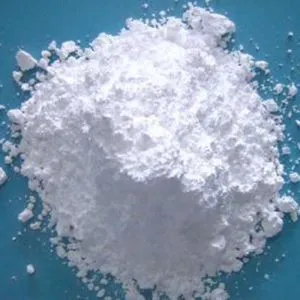
Antimony trioxide is a kind of high dispersed superfine granular material, made from antimony trioxide powder of which surface is treated through chemical method that make the powder slightly moisturizes to avoid any fine powder suspending in the air and bringing out harm to human body, meanwhile the antimony trioxide can resist fire and enhance the plastic features.
Antimony trioxide, also known as antimony(III) oxide or stibium oxide, has the chemical formula Sb2O3. It is a white crystalline powder that is slightly soluble in water and has low toxicity compared to other antimony compounds. Antimony trioxide is used in a variety of industrial applications, including flame retardants, ceramics, and glass. It is also used in the production of plastics, where it helps to reduce the flammability of the material. Additionally, antimony trioxide is used in the manufacture of paints, enamels, and pigments. Due to its unique chemical properties, antimony trioxide is an important material in many industries.
Catalytic Agent
Antimony trioxide serves as an effective catalytic agent in several chemical reactions. Its ability to promote reactions without being consumed makes it a valuable catalyst in the petrochemical industry, where it is used in the production of certain chemicals and fuels. Additionally, it finds applications in the catalytic conversion of harmful emissions in automotive exhaust systems, helping to reduce environmental pollution.
Chemical Stabilizer
Antimony trioxide exhibits excellent chemical stability, making it a suitable additive in polymers and plastics to enhance their durability and resistance to degradation. Its ability to withstand extreme temperatures and chemical reactions without significant changes makes it a reliable stabilizer in demanding applications.
Flame Retardant Properties
One of the most significant advantages of antimony trioxide is its flame retardant properties. It is widely used as a synergist with halogenated flame retardants, particularly in the plastics industry. When combined with these retardants, antimony trioxide significantly enhances the material's resistance to ignition and slows down the spread of fire. This makes it an essential component in the production of fire-resistant materials for construction, transportation, and electronics.
Cost-effectiveness
Despite its diverse range of applications, antimony trioxide is a cost-effective material. Its availability and relatively low production costs make it an economical choice for various industries seeking high-performance solutions without significant financial investments.
Glass And Ceramics Industry
Antimony trioxide plays a crucial role in the glass and ceramics industry. It is used as a clarifier in glass production, helping to remove impurities and improve transparency. In ceramics, it acts as a flux, lowering the melting point of other materials and facilitating the formation of desired shapes and textures.
Versatility In Applications
The versatility of antimony trioxide in different applications is another significant advantage. Its unique combination of physical and chemical properties allows it to be tailored for specific uses in various industries, including construction, electronics, automotive, and aerospace. This versatility ensures its continued demand and relevance in today's rapidly evolving industrial landscape.
-
![Antimony Trioxide Flame Retardant Synergist CAS1309-64-4]() Antimony Trioxide Flame Retardant Synergist CAS1309-64-4
1.Product Name:Antimony Trioxide2.CAS
-
![Antimony Trioxide Flame Retardant CAS1309-64-4]() Antimony Trioxide Flame Retardant CAS1309-64-4
1.Product Name:Antimony Trioxide2.Cas