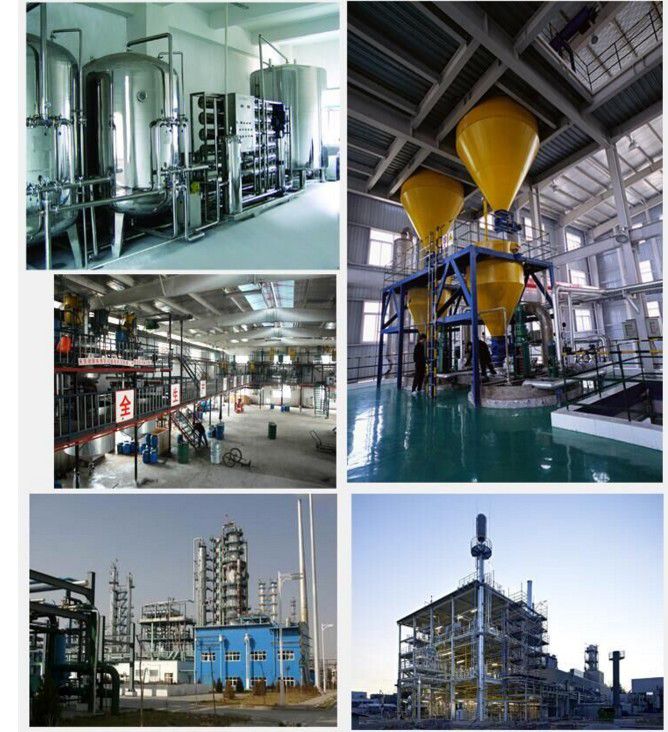
The product has a strong adsorption properties. In the hydrolysis process, some chemical physics process such as coagulation, adsorption and precipitation. The fundamental difference between PAC and traditional inorganic coagulants is that traditional inorganic coagulants is low molecular crystal salt, while PAC is consist of multiple carboxyl complex which with variety forms. With high speed of flocculent precipitate, PAC can be used in various PH value. Non-corrosive pipeline equipment, water purification effect,.

What Is Aluminum Chloride?


Aluminum chloride is a chemical compound with the chemical formula AlCl3. When contaminated with iron chloride, it often displays a yellow color compared to the white pure compound. It is used in various chemical applications as a Lewis base, with anhydrous aluminium trichloride being the most commonly used Lewis acid. It may also be found in over-the-counter as an antiperspirant or prescription products as an antihemorrhagic agent. In antiperspirant products, FDA approves the use of aluminum chloride as an active ingredient up to 15%, calculated on the hexahydrate form, in an aqueous solution nonaerosol dosage form 4.

Advantages of Aluminum Chloride


High efficiency
One of the primary advantages of pac is its high efficiency in water treatment. It effectively removes contaminants such as suspended solids, organic matter, and colloidal particles from water, making it suitable for various applications ranging from municipal water treatment to industrial processes.


Wide applicability
Pac finds applications in diverse industries including municipal water treatment plants, pulp and paper manufacturing, textiles, oil and gas, and more. Its versatility makes it a preferred choice for water treatment processes across different sectors.


Rapid flocculation
Pac exhibits rapid flocculation properties, leading to quicker sedimentation and clarification of water. This rapid action helps in reducing the processing time and enhances overall efficiency in water treatment operations.


Ph tolerance
Unlike some other coagulants, pac is effective over a wide ph range, which makes it suitable for treating water with varying ph levels without the need for ph adjustment. This characteristic simplifies the treatment process and reduces operational costs.


Reduced sludge generation
Pac generates less sludge compared to traditional coagulants such as aluminum sulfate (alum). The lower sludge volume translates to reduced disposal costs and minimizes the environmental impact associated with sludge disposal.


Improved settling characteristics
The use of pac results in improved settling characteristics of flocs, leading to enhanced sedimentation rates and clearer filtrates. This is particularly beneficial in water treatment processes where the production of clean water is crucial.


Cost-effectiveness
Despite its superior performance, pac is often more cost-effective than alternative coagulants. Its high efficiency, lower dosage requirements, and reduced sludge generation contribute to overall cost savings in water treatment operations.

Why Choose Us

Product Diversification

Xiamen ditai chemical co., ltd. Is a professional chemical company in China, with products including industrial chemicals, animal feed additives, food additives, agricultural chemicals, fertilizers, pharmaceuticals, water treatment and minerals

Good Price-performance Ratio

We believe that competitive prices for goods are also important. Our comprehensive distribution network, purchasing power and efficient inventory management system enable us to provide our products at the best prices

Professional Team

Our management team has about 20 years of combined expertise to meet customer needs.


Certificate Certification

Iso9001:2008 certified institutions, iso9001 standard quality management and sgs quality control can allow us to clearly grasp the actual quality of the goods.

 
Application of Aluminum Chloride
 
01/

Chemical industry
Aluminum chloride is extensively used in the chemical industry for various processes. It serves as a catalyst in numerous organic reactions, such as friedel-crafts acylation and alkylation, which are important in the production of pharmaceuticals, fragrances, and dyes. Aluminum chloride also acts as a lewis acid catalyst in polymerization reactions, particularly in the production of polyolefins.

02/

Water treatment
Aluminum chloride is employed in water treatment processes, primarily for the purification of drinking water and wastewater treatment. It acts as a coagulant, facilitating the removal of suspended particles, colloids, and organic matter. Aluminum chloride forms flocs that aid in the sedimentation and filtration processes, resulting in cleaner and clearer water.

03/

Pharmaceuticals
Aluminum chloride finds application in the pharmaceutical industry. It is used as an ingredient in antiperspirants, where it acts as an astringent. Aluminum chloride-based antiperspirants reduce perspiration by temporarily blocking sweat ducts. Additionally, aluminum chloride is used in the production of certain medications, particularly for the treatment of hyperhidrosis (excessive sweating).

04/

Metal surface treatment

Aluminum chloride is used for metal surface treatment and finishing processes. It is employed as an etching agent for aluminum and its alloys to prepare the surface for subsequent treatments, such as anodizing or coating. Aluminum chloride also acts as a flux in soldering and welding applications, improving the flow of molten metal and enhancing joint strength.

05/

Petrochemical industry

In the petrochemical industry, aluminum chloride is utilized in various processes. It is employed as a catalyst in the alkylation of hydrocarbons, a vital step in the production of high-octane gasoline. Aluminum chloride is also used as a catalyst in the production of polymers, such as polypropylene and polyethylene.

06/

Textile industry
Aluminum chloride finds application in the textile industry, specifically in dyeing processes. It acts as a mordant, aiding in the fixation of dyes to textile fibers. Aluminum chloride enhances the colorfastness and durability of dyes, resulting in vibrant and long-lasting colors. It is commonly used in the dyeing of natural fibers like cotton, silk, and wool.

07/

Oil and gas industry
Aluminum chloride has applications in the oil and gas industry, particularly in drilling operations. It is used as a drilling fluid additive to improve the stability and viscosity of drilling muds. Aluminum chloride helps prevent wellbore collapse by increasing the viscosity and reducing fluid loss in the drilling process.

08/

Miscellaneous applications

Aluminum chloride has various other applications across different sectors. It is used in the production of aluminum metal through the hall-héroult process. Aluminum chloride is also employed in the synthesis of specialty chemicals, such as aluminum-based pigments, phthalocyanine dyes, and pharmaceutical intermediates.

09/

Adhesives and sealants
Aluminum chloride finds utility in the manufacturing of adhesives and sealants. It is used as a catalyst in the polymerization and curing of various adhesive formulations, such as epoxy resins. Aluminum chloride-based adhesives exhibit excellent bonding strength and adhesion properties.

10/

Deodorants and personal care products

Aluminum chloride is a key ingredient in certain deodorants and personal care products. It acts as an antiperspirant, temporarily blocking sweat ducts and reducing perspiration. Aluminum chloride-based deodorants are effective in controlling underarm wetness and odor.

Derivation of Aluminium Chloride Formula
 

The chemical formula of aluminium chloride happens to be AlCl3. This formula implies that three chloride ions are required for one aluminium ion.


According to a general rule in chemistry, an atom gains or loses electrons in order to have a total of eight electrons in the outermost shell. Aluminium contains three electrons in the outermost shell. In contrast, chlorine contains seven electrons in its outer shell.


Aluminium has a need to get rid of three electrons. Consequently, the inner electron shell would become the outer shell, which already has eight electrons. Furthermore, chlorine has seven electrons in its outer shell. Therefore, chlorine has one empty space available.

Anhydrous Aluminum Chloride CAS 7446-70-0


Poly Aluminum Chloride CAS 1327-41-9

So, in case aluminium and chlorine come close, they would be a help to each other. In terms of electrons, chlorine is the greedy one. One aluminium is capable of losing three electrons. Hence, three atoms of chlorine will pull those three electrons. Ultimately, this stabilizes the aluminium. Moreover, stabilization of the chlorine atoms also takes place because of the filling of the one empty space.


This electron provides four charged particles. Furthermore, these four electrons stick together due to the attraction of the opposite charges. Aluminium chloride is devoid of any net charge. Moreover, it is neutral like all ionic compounds. Most noteworthy, one can write the aluminium chloride formula as:

Al+3+3Cl−1→AlCl3

Process of Aluminum Chloride


Raw material preparation
The process starts with raw material preparation. High-purity aluminum sources such as aluminum hydroxide or bauxite are selected to ensure the quality of the final product. These raw materials are carefully processed and refined before entering the production line.


Reaction stage
The heart of the continuous flow production process lies in the reaction stage. In this stage, aluminum hydroxide and hydrochloric acid are mixed in a controlled ratio in a continuous flow reactor. The use of advanced mixing technology and precise control of reaction conditions ensures that the reaction is continuously efficient to form polyaluminum chloride.


Polymerization and optimization
The continuous flow reactor design also allows for the control of the polymerization of aluminum ions to form pac. By optimizing reaction parameters such as temperature, pressure and residence time, manufacturers can tailor the properties of pac products to meet specific application requirements.


Product separation and purification
After the reaction is completed, the mixture is sent to a separation unit to separate the pac product from residual reactants and by-products. Innovative separation technologies such as membrane filtration are used to minimize waste generation and maximize product yield.


Environmentally friendly treatment of by-products
In line with the concept of sustainable development, by-products generated during the production process are properly managed. The impact of waste on the environment is significantly reduced through the implementation of environmentally friendly treatment methods such as neutralization and safe landfill.

 
How to Choose a Aluminum Chloride
 

Understand your water treatment requirements
Define the specific requirements of your water treatment process. Identify the impurities, contaminants, or substances you need to remove from the water. Understanding your treatment goals will guide you in selecting the pac formulation that best addresses your needs.


Assess the water characteristics
Examine the characteristics of the water you are treating, including ph levels, temperature, turbidity, and the nature of impurities. Different pac formulations are designed to perform optimally under specific water conditions. Matching the product to your water characteristics is essential for effective treatment.


Determine coagulation and flocculation requirements
Consider whether your water treatment process requires a pac product with coagulant properties, flocculant properties, or both. Coagulants are effective in destabilizing particles, while flocculants aid in the formation of larger flocs for easier sedimentation and filtration.


Pac formulation types
Understand the different pac formulations available, such as liquid, powder, or granular forms. The choice between formulations depends on factors like ease of handling, dosing requirements, and the specific demands of your water treatment system.


Aluminum content and basicity
Consider the aluminum content and basicity of the pac product. The aluminum content influences the coagulation performance, while basicity affects the ph stability of the solution. Balancing these factors is crucial for achieving efficient and stable water treatment results.


Compliance with regulatory standards
Ensure that the selected pac product complies with local and international regulatory standards for water treatment chemicals. Verify that the product meets the required purity levels and is suitable for use in your specific application, such as drinking water treatment or industrial processes.


Dosage and application method
Determine the optimal dosage of pac for your water treatment process. Consider the application method, whether it's through direct dosing, dilution, or in combination with other chemicals. Understanding the dosage requirements and application method is crucial for achieving cost-effective and efficient treatment.


Supplier reputation and support
Choose a reputable supplier with a track record of providing high-quality pac products. Consider factors such as the supplier's reputation, technical support, and the availability of relevant documentation, including product specifications and safety data sheets.


Pilot testing
If possible, conduct pilot testing with small-scale applications before full-scale implementation. Pilot testing allows you to assess the performance of the selected pac product under real-world conditions, ensuring that it meets your treatment objectives effectively.


Regular monitoring and adjustments
Implement a monitoring program to assess the ongoing performance of the selected pac. Regularly analyze treated water to ensure that the desired water quality standards are maintained. Make adjustments to dosage or formulation as needed based on monitoring results.

 
Safety Precautions When Using the Aluminum Chloride


Aluminium chloride can be toxic to people, especially in its ‘anhydrous form'. It is highly corrosive, and therefore it can cause significant harm if inhaled, ingested, or comes into contact with the skin. Inhalation can cause severe noise and trouble breathing, throat irritation, nausea, headache, and vomiting. If it goes into the eyes, it can cause severe eye discomfort and perhaps irreversible damage. Skin contact might cause significant irritability or burns. Ingestion can cause long-term disease.


Aluminium chloride is typically only encountered in a lab or industrial context. In these circumstances, facility managers must ensure that individuals are not exposed. When splashing is a risk, respiratory protection and adequate ventilation, chemical-resistant PVC gloves, face shields, chemical-proof goggles, boots, PVC aprons, etc. As a precaution, management should provide decontamination baths and eyewash stations.

 
Company Introduction


Xiamen Ditai Chemicals Co., Ltd is a professional chemical company in China. Specializing deal and export various kinds of quality chemicals since 1997. The products Include industry chemical, Animal feed additive, Food additive, Agrochemical, Fertilizer, pharmaceuticals, water treatment and Minerals. Our management team has about 20 years of combined expertise meeting the needs of clients. We are proud our quality chemcials and service was approbated by the clients in the worldwide. Xiamen Ditai Chemicals Co., Ltd is an ISO9001:2008 certificated organization. We always pay attention to the quality control......

productcate-1-1


Our certificates

ISO9001:2008 certified organization, ISO9001 standard quality management and SGS quality control can let us clearly grasp the actual quality of the goods

productcate-1-1


FAQ

Q: What is aluminum chloride?

A: Aluminum chloride (AlCl₃) is an inorganic compound that appears as a white to yellowish deliquescent solid at room temperature. It has a strong odor and is highly soluble in water.

Q: What is the molecular structure of aluminum chloride?

A: Aluminum chloride has a molecular weight of 133.34 g/mol and its structure can exist in various forms, most commonly as a dimer (Al₂Cl₆) in solid form and a monomer in the gas phase.

Q: How is aluminum chloride produced industrially?

A: It is typically produced by reacting aluminum metal with chlorine gas or by treating aluminum hydroxide with concentrated hydrochloric acid.

Q: What are the main uses of aluminum chloride?

A: Aluminum chloride is used in the oil refining industry, as a catalyst in petrochemical synthesis, and as a reagent in organic chemistry. It's also used in the production of paper and as a water treatment chemical.

Q: Is aluminum chloride toxic?

A: Yes, aluminum chloride is toxic upon inhalation and can irritate the skin and eyes. It should be handled with proper safety gear.

Q: Can aluminum chloride react explosively?

A: Pure aluminum chloride does not explode under normal conditions, but reactions with water can generate heat and release hydrogen chloride gas, which can be hazardous.

Q: What happens when aluminum chloride reacts with water?

A: Upon contact with water, aluminum chloride reacts to form aluminum hydroxide and releases hydrogen chloride gas, producing fumes of hydrochloric acid.

Q: Is aluminum chloride flammable?

A: Aluminum chloride itself is not flammable, but it can catalyze the ignition of combustible materials due to the exothermic reaction it undergoes with water.

Q: What is the melting point of aluminum chloride?

A: The melting point of aluminum chloride is around 190°C, although it sublimes rather than melts at this temperature.

Q: Does aluminum chloride have a boiling point?

A: Aluminum chloride sublimes at 182.9°C without reaching a true boiling point.

Q: How stable is aluminum chloride under standard conditions?

A: Aluminum chloride is stable under standard conditions but reacts with moisture in the air, becoming unstable and forming hydrochloric acid.

Q: What precautions should be taken when storing aluminum chloride?

A: Store it in a cool, dry place away from moisture and incompatible substances, using proper ventilation to prevent the buildup of fumes.

Q: Is aluminum chloride used in medicine?

A: Aluminum chloride hexahydrate is used in antiperspirants and as an astringent in some topical medications.

Q: Can aluminum chloride be recycled?

A: Recovery of aluminum from aluminum chloride waste can be achieved through pyrometallurgical processes, although it is less common than recycling aluminum from scrap.

Q: What is the environmental impact of aluminum chloride?

A: Improper disposal can lead to soil and water contamination, affecting aquatic life and the ecosystem. Proper handling and disposal are necessary to minimize environmental harm.

Q: How does aluminum chloride affect the pH of solutions?

A: Aluminum chloride, when dissolved in water, forms acidic solutions due to the release of hydrogen ions.

Q: Is aluminum chloride corrosive to metals?

A: It can be corrosive, especially in the presence of water, accelerating corrosion in metals due to the formation of hydrogen chloride.

Q: What is the role of aluminum chloride in the Friedel-Crafts alkylation reaction?

A: In the Friedel-Crafts alkylation, aluminum chloride acts as a Lewis acid, promoting the formation of carbocations and facilitating the addition of alkyl groups to aromatic rings.

Q: Is aluminum chloride soluble in organic solvents?

A: Aluminum chloride is moderately soluble in certain organic solvents like dichloromethane, making it useful in organic synthesis.

Q: What is the health impact of long-term exposure to aluminum chloride?

A: Long-term exposure can cause respiratory issues, skin damage, and potentially more serious health effects due to the accumulation of aluminum in the body.

Xiamen Ditai Chemicals Co., Ltd. is one of the leading aluminum chloride manufacturers and suppliers in China. We warmly welcome you to buy cheap aluminum chloride from our factory. All our products are with high quality and competitive price.

Aluminum Chloride Gel

Send Inquiry